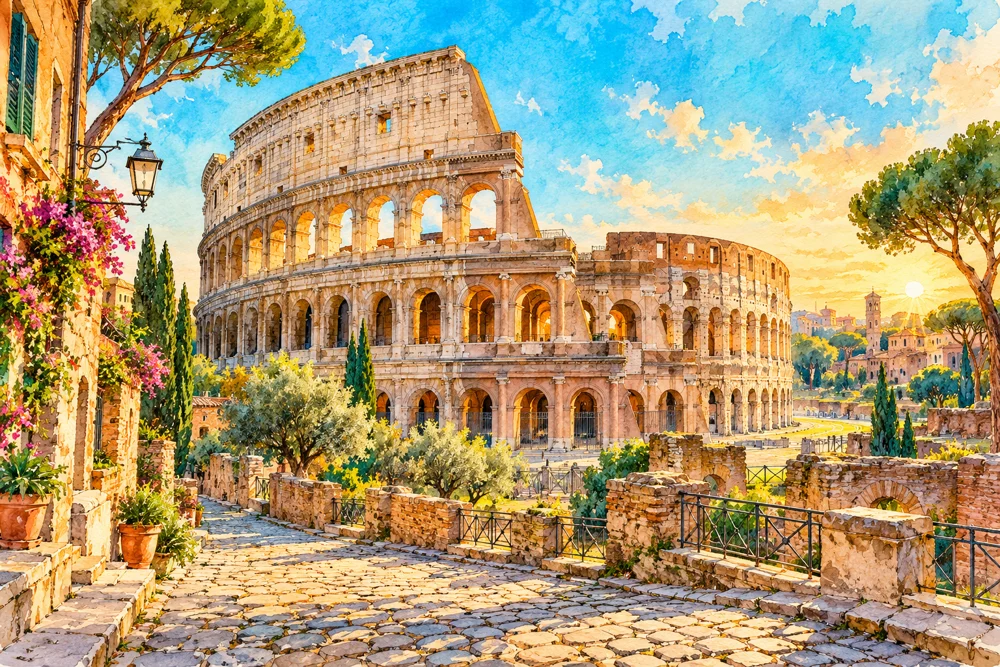
Three days in Rome are enough for a memorable introduction, provided you resist treating the city as a checklist with a finish line. The sensible goal is a few well-planned days with room for pauses, meals and unexpected discoveries. This itinerary groups outings by area so you can spend more time exploring and less time repeatedly crossing the city.
Use it as a flexible framework. Arrival and departure days, mobility needs and your interests may change the order. These are research-based suggestions, not a claim that we personally completed the route.
The three-day plan at a glance
| Day | Main focus | Planning priority |
|---|---|---|
| 1 | Colosseum, Roman Forum and Palatine area | Secure the appropriate admission and entry slot |
| 2 | Historic-centre streets, squares and fountains | Choose a manageable walking route |
| 3 | Vatican area, or a slower neighbourhood day | Choose your museum visit before adding extras |
Day 1: give ancient Rome enough time
Build the first full day around the Colosseum area rather than adding several distant attractions. The Roman Forum and Palatine offer a natural continuation for visitors interested in ancient Rome. How much you combine should depend on your energy, the ticket you select and the time you want to spend inside.
The Colosseum operator requires an entry-time reservation. Check its official ticket page for the current sale window, available ticket types and conditions. A ticket description matters: different products can include different areas or experiences. Do not assume every listing offers the same access.
Keep the rest of this day deliberately light. Plan a meal break and an easy evening rather than another major timed booking. If ancient history is your main interest, this is where to give yourself extra time instead of rushing to complete the next box.
Day 2: enjoy the historic centre at walking pace
Make the second day a sequence of neighbourhood walks, using places such as the Spanish Steps, central squares and the river as reference points. Rome’s tourism board publishes a 72-hour route that provides useful context for arranging these outings. You do not need to reproduce every stop.
Choose a start and finish that work with your hotel. Put one or two places you especially want to see on the route, then leave the rest flexible. When planning for a family or a mixed-age group, a shorter walk with a relaxed lunch can be more satisfying than a long route followed by a tired journey home.
Trastevere is an option for a separate neighbourhood outing, particularly if wandering streets and finding somewhere to eat appeal more than adding another museum. Treat it as a choice, not a compulsory detour that must fit into an already crowded day.
Day 3: choose the Vatican, or choose a slower finish
If the Vatican Museums are a priority, organise that visit first and build the rest of the day around it. The museum operator identifies its official online ticketing site; use the official information to understand reservations and visit arrangements. Compare any third-party tour against what is actually included.
A museum visit and every nearby attraction do not need to become one marathon. Allow time for the entry process and your own pace inside. Visitors who prefer a lighter final day can instead revisit the historic centre, explore another neighbourhood or leave room for a leisurely meal before departure.
Where should you stay for this itinerary?
Compare a walking-oriented central base with a stay near useful transport. Neither is automatically cheaper once airport transfers and everyday journeys are included. Put the hotel, your timed bookings and your arrival point on the same map before choosing.
Check whether the room has the layout your group needs, whether breakfast is included and whether cancellation terms suit your plans. Keep sightseeing tickets and hotel reservations as separate decisions; a good room deal does not remove the need to confirm attraction availability.
A practical booking order
- Decide your travel dates and whether you have three full days.
- Identify the one or two timed attractions that matter most.
- Compare hotel locations against that route.
- Check full room costs and cancellation terms.
- Leave at least one part of each day flexible.
Frequently asked questions
Can I see all of Rome in three days?
No. Use three days for an introduction, and prioritise the experiences you care about rather than trying to cover the whole city.
Should every day have a booked tour?
Only if that suits your interests and pace. Keep some unbooked time so a delayed arrival or a longer museum visit does not disrupt the entire itinerary.
Compare your Rome stay
Enter your dates and check the full price, location and cancellation conditions on Expedia. This affiliate link opens the destination page.
Explore Rome on Expedia ↗We may earn a commission from eligible bookings at no extra cost to you.
Sources and research notes
Reference pages checked October 8, 2026. Route choices and comparison checklists are our editorial suggestions. Opening times, ticket rules and transport services can change; check the operator before travelling.